


10 Apr The Human-AI Fusion Framework for FMCG Innovation Success
Picture this: Your team is preparing for a high-stakes FMCG product launch. The room buzzes with tension. Marketing demands more budget, R&D requests more time, and leadership debates the risk-reward equation. It feels like a chessboard where every move could spell triumph or disaster.
Sounds familiar? Many FMCG teams face this scenario. I lived it, too, while launching Ninbooz (India’s first packaged Nimbu Paani). Creating a new category and providing a remedy for a lack of consistency in taste/ quality and price seemed daunting. Intuition and sheer effort carried the day back then, but can this process become more consistent, repeatable, and future-ready?
As Jeff Bezos famously said: “You have to be willing to be misunderstood if you’re going to innovate.”
The Evolution of FMCG Innovation
- Till the early 2000s, innovation often meant slight tweaks to existing products. Vast distribution networks and mass advertising dominated heritage brands. R&D budgets were minuscule, and the consumer didn’t demand much more.
- Fast-forward to today—consumers are informed, experimental, and demand global standards. Companies, too, have shifted gears. Rapid prototyping, AI-driven insights, and no-frills innovation processes are the norm. Startups are disrupting markets, and big players are exploring acquiring them to stay relevant.
The year-to-year viability of a company depends on its ability to innovate. Yet many companies have not yet learned to manage innovation strategically – HBR, 2012
However
But what’s driving this transformation?
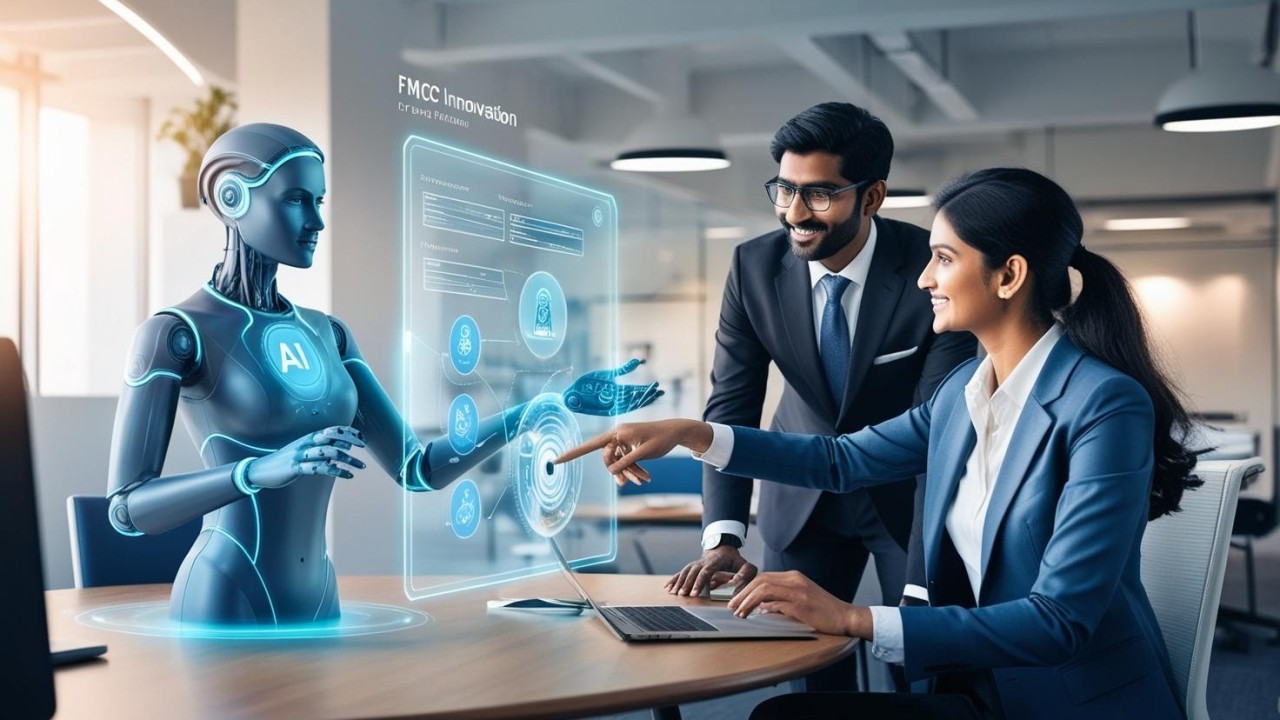
A perfect combination of Humans (both, in and outside the company) and AI-based features are adding a ‘spring to the steps‘ of the FMCG world.
As per BCG AI Radar report, Jan’25 spanning 1800+ C-Suite executives
64% of the executives see Talent and AI as complementary and working side by side vs Human-centred or AI-focused
According to a Deloitte report, 58% of employees say increased innovation is one of AI’s most important benefits. – Harvard Business Review, September 2024
The Human-AI Fusion Framework
Here’s a streamlined framework to tackle FMCG innovation challenges by leveraging this partnership:
- The Compass: Aligning Organizational Vision: Aigning goals and priorities through AI dashboards that unify objectives across departments, enabling faster, data-driven decisions. (‘Innovations hit the marketplace in a matter of weeks and months versus years’ – HUL R&D)
- The Telescope: Proactive Trendspotting: Address FOMO on industry trends by AI tracking competitor moves and consumer behaviours, identifying trends before they mature. (Nestle’s ‘Garden Gourmet’ – plant-based snacks 6 months ahead of the competition)
- The Safety Net: De-risking Bold Moves: Tackle ‘Fear of failure and resistance to innovation’ through AI simulations to predict outcomes in virtual environments, reducing risks. (Global beverage maker)
- The Engine: Accelerating R&D: De-bottleneck long R&D cycles through AI-accelerated pipelines, identifying viable ideas faster and cutting prototyping costs. (Mondelez flavour profiling)
- The Glue: Breaking Silos: Tackle disjointed efforts across functions through shared AI platforms to ensure consistent messaging and execution.
- The Catalyst: Securing Leadership Buy-in: Addressing hesitation to invest in innovation by ROI working through predictive modelling, building confidence. (P&G’s sustainable packaging)
- The Trust Builder: Driving AI Adoption: Sort leadership hesitation to invest in innovation through AI-based quick wins to build trust gradually. (Coca-Cola’s AI-optimized marketing campaign)
As we navigate this era of human-AI collaboration, the question isn’t whether AI will shape FMCG innovation—it’s how ready we are to embrace the change.
The Human-AI Fusion Framework is a strategy and a competitive edge your organization can leverage to stay ahead of the curve.
Now it’s your turn:
- What challenges have you faced in balancing human intuition with AI precision?
- Are your teams leveraging AI to fuel innovation or are you still in an evaluation mode?
Share your thoughts, experiences, or questions in the comments—or hit reply to discuss how this framework can work for your business.
Don’t miss the next edition! Subscribe now to stay ahead of the innovation curve and get exclusive insights on AI-powered growth in the consumer sector.
No Comments